


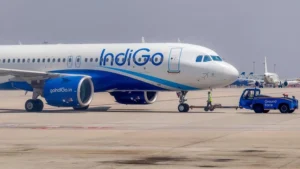
New Delhi, December 2025 – India’s largest airline, IndiGo, has entered one of the biggest operational meltdowns in recent aviation history, leaving thousands of passengers stranded and triggering regulatory action, political debate, and a massive market fallout. What began as an adjustment to India’s new pilot duty regulations quickly spiraled into a full-fledged crisis, raising uncomfortable questions about the airline’s planning and the country’s aviation resilience.
A Crisis Years in the Making
The turbulence began with the rollout of the Directorate General of Civil Aviation’s (DGCA) revised Flight Duty Time Limitations (FDTL), which tightened rest requirements and capped night landings for pilots. The rules had been announced months earlier – but IndiGo, critics argue, failed to prepare for the tighter constraints.
By the first week of December, the consequences became stark: IndiGo began canceling large clusters of flights nationwide. Passengers scrambled for alternatives as airport terminals overflowed with exhausted travelers demanding answers.

IndiGo Admits ‘Network Reset’
Facing public backlash, IndiGo issued a series of statements acknowledging a “network reset” as the airline struggled to realign pilots, aircraft schedules, and crew duty rosters. The airline said it was offering hotel stays and transfers for affected passengers, but ground reports showed long queues, chaotic scenes, and mounting frustration.
The carrier insisted it would stabilize operations “within days,” but the cancellations continued to pile up, reaching what industry officials estimate as several thousand flights over a short span.
Regulator Steps In – And Turns Up the Heat
The DGCA immediately issued show-cause notices to IndiGo’s top management, demanding detailed explanations for the mass disruptions. Multiple inquiry committees were formed. What surprised many was the regulator’s unusual step of offering temporary operational relaxations to help IndiGo get back on track.
This move triggered a fierce debate. Pilot groups accused authorities of compromising on fatigue standards. Opposition leaders questioned why the government appeared to bend rules for a private airline while passengers suffered.
Market Meltdown: IndiGo Shares Dive
As cancellations mounted, the financial markets reacted sharply. IndiGo’s stocks plunged, wiping out tens of thousands of crores in market value within days. Brokerage firms warned of heightened operational risk, potential compensation liabilities, and long-term reputational damage.
Credit-rating agencies described the crisis as “operationally negative with potential credit implications.”
The Central Question: Did IndiGo Miscalculate?
While IndiGo attributes the chaos mainly to the new FDTL rules, analysts point to a different story.
Industry insiders and pilots allege:
- The airline expanded routes aggressively this winter season.
- Hiring slowed down even as pilot availability dropped.
- Reserve crew pools were insufficient for sudden regulatory shifts.
- Rostering buffers were minimal despite months of advance notice.
If these claims hold, the crisis was less a regulatory shock and more a case of misjudgment and understaffing.
A Systemic Risk: When the Largest Airline Fails
IndiGo controls nearly 65% of India’s domestic aviation market. This dominance has now become a point of concern: when a player that large collapses operationally, the entire ecosystem – airports, passengers, connecting airlines – feels the shockwaves.
Competitors simply do not have enough spare capacity to absorb the sudden surge in rebookings.
Political Firestorm
The situation quickly escalated to the national stage:
- Parliament demanded answers from the Ministry of Civil Aviation.
- Consumer rights groups criticized the airline for “unpreparedness and poor communication.”
- Opposition parties accused the government of mismanaging the sector.
Aviation unions, meanwhile, issued stark warnings that safety rules must not be diluted to compensate for corporate missteps.

Passengers Bear the Brunt
Across major hubs – Delhi, Mumbai, Bangalore, Hyderabad – passengers shared stories of:
- Missed weddings and business meetings
- Hours-long queues for rebooking
- Unclear refund processes
- Last-minute cancellations announced at the boarding gate
Social media filled with videos of tense scenes between airline staff and stranded customers, further damaging IndiGo’s public image.
Lessons and the Road Ahead
Aviation analysts say the crisis highlights deep structural vulnerabilities in India’s civil aviation sector:
1. Regulatory reforms require stronger enforcement and advance planning
Even well-intentioned safety rules can trigger chaos if airlines do not adapt early.
2. Dominant airlines need mandatory contingency buffers
When one airline holds such a large share of the market, failures cannot be allowed to cascade unchecked.
3. Greater transparency is needed
Passengers were left in the dark, receiving delayed updates and unclear compensation information.
4. The government must balance safety with operational continuity
Relaxing fatigue rules – even temporarily – risks long-term trust in the system.
IndiGo’s Challenge: Regain Trust
While the airline works to restore its schedule, a larger battle awaits: rebuilding credibility. Market confidence, customer loyalty, and regulatory goodwill have all taken a hit.
IndiGo is expected to submit detailed compliance plans to the DGCA, expand hiring, and introduce stronger rostering tools. But experts caution that recovery will take weeks – and reputational recovery, much longer.
The Final Takeaway
The December 2025 meltdown is not just an IndiGo crisis – it’s a national aviation wake-up call. As India emerges as one of the world’s fastest-growing air travel markets, its systems must evolve accordingly. Passenger rights, safety enforcement, and operational discipline cannot be afterthoughts.
For now, India’s skies remain turbulent – and the country’s most dominant airline faces its toughest test yet.
About The Author



More Stories
Asia at Boiling Point: How Weather Is Rewriting the Region’s Future
Maithili Thakur: From Folk Singing Sensation to Rising Political Star
Mysuru Dasara: The Royal Festival of Karnataka – History, Culture, and Celebration